In Indian Harbour Beach, the Waterfront House Isn't Always the One With the Bigger Insurance Bill
August 20, 2026
August 20, 2026
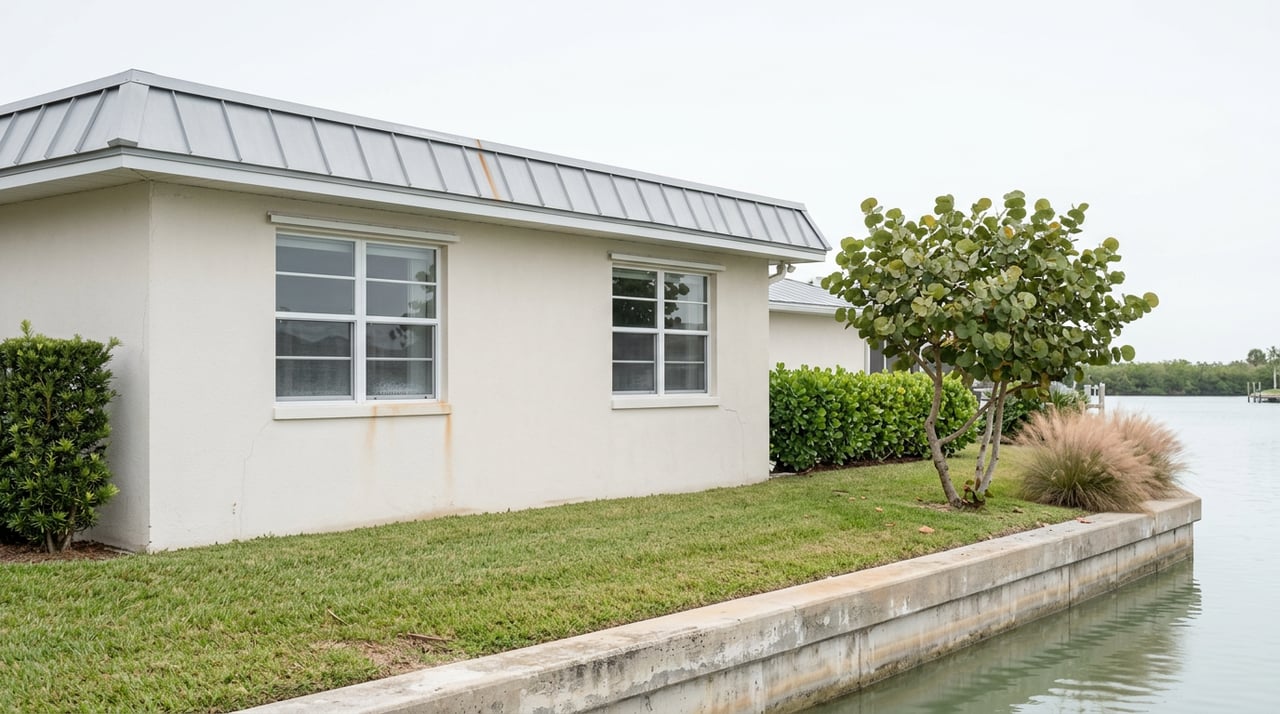
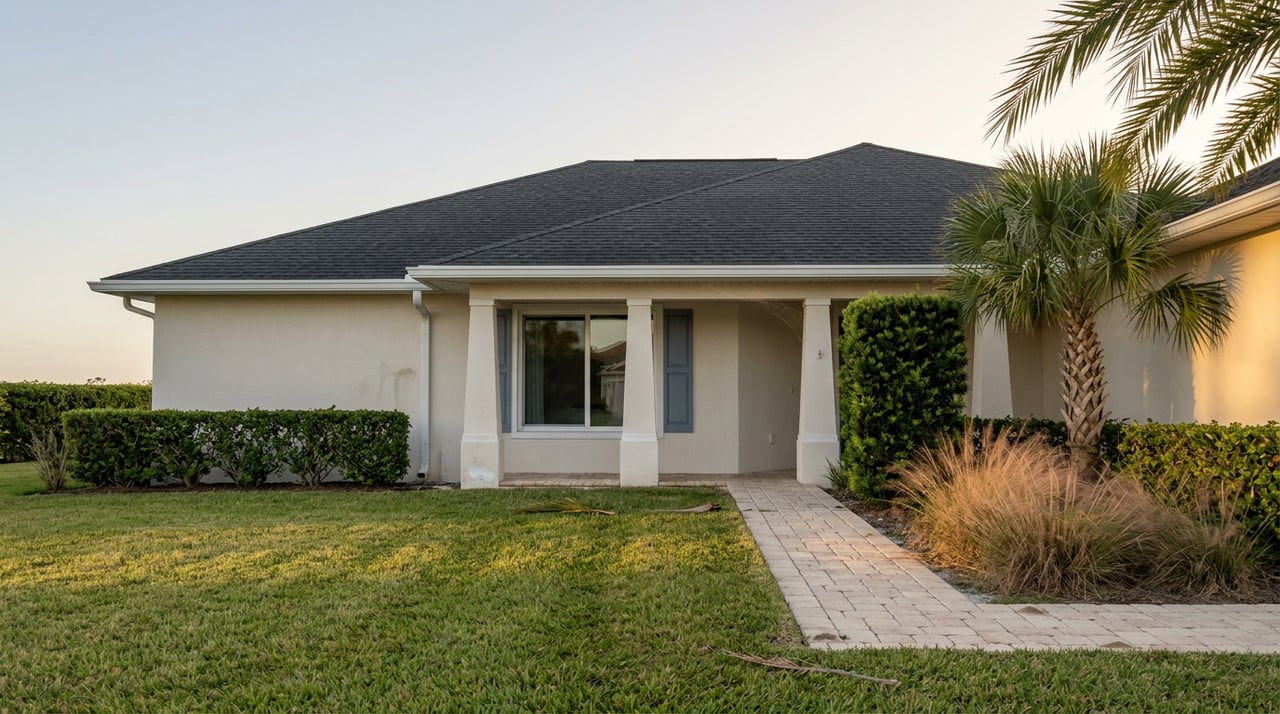
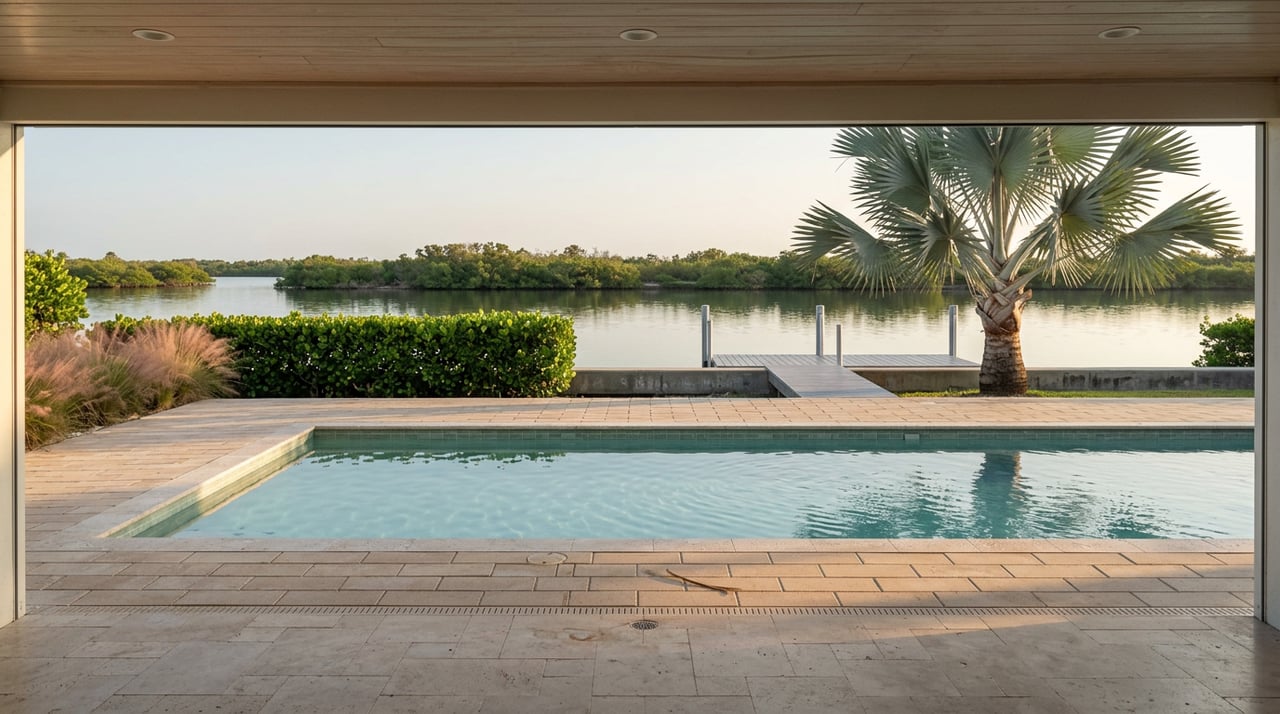
Picture two homes for sale on the same week in Indian Harbour Beach. One sits on the Grand Canal, dock included, water lapping at the seawall. The other is three streets inland in Martesia, dry lot, same square footage, similar year built. Most buyers walk into that comparison assuming the canal house comes with a canal-sized insurance bill. Sometimes it does. Sometimes the dry-lot house costs more to insure, and the reason has almost nothing to do with elevation, flood zone, or how close either house sits to the water.
It comes down to a piece of paperwork most buyers never think to ask for: whether the seller's flood insurance policy can simply be handed to them.
Since FEMA finished rolling out Risk Rating 2.0, flood premiums are no longer set by a broad zone designation. Every property gets its own price, built from its specific elevation, its distance to water, its foundation type, and what it would cost to rebuild it. Two houses in the same flood zone on the same street can carry meaningfully different premiums once that math runs.
What most people miss is the other half of the system. A National Flood Insurance Program policy is assumable. According to guidance from the National Association of Realtors, insurers can assign a seller's existing NFIP policy to a buyer simply by substituting names on the paperwork, no new policy required. That matters because an older, grandfathered NFIP policy can sit well below what a brand new Risk Rating 2.0 quote would charge for the same address today, and once a buyer takes over that policy, future increases are capped by law at 18 percent a year for a primary residence. Buying the house without asking for that assignment means starting from scratch at full current-market pricing instead.
That single question, is this policy assumable, can matter more to a buyer's real monthly cost than whether the listing says waterfront or dry lot.
This isn't an abstract planning exercise. NFIP's authority to sell and renew policies is set to expire at 11:59 p.m. on September 30, 2026, unless Congress acts before then. From today, that's 44 days out. Existing policies keep running through their term with a 30-day grace period if the deadline passes without action, but the program would stop writing new contracts and renewals until it's reauthorized.
Here's the part that actually raises the stakes for a canal or Intracoastal purchase in Indian Harbour Beach this fall: even during a lapse, insurers can still assign an existing seller's policy to a buyer, because that's a substitution, not a new policy. So the assumability question becomes more valuable, not less, if this deadline passes without a fix. A buyer under contract on a waterfront home who lines up the seller's policy assignment ahead of closing has a path forward regardless of what Congress does in late September. A buyer counting on writing a brand new flood policy at the closing table does not.
Congress has let NFIP lapse before, most recently for 43 days during the fall 2025 government shutdown, and has reauthorized it retroactively every time it has lapsed. That track record is reassuring, but it isn't a reason to leave the paperwork until the week of closing.
Indian Harbour Beach isn't one market. It's several, stacked by proximity to water, and each one has a different relationship to this insurance question.
| Tier | Typical 2026 price range | What to ask before writing an offer |
|---|---|---|
| Dry-lot single-family (Harbor Lights, Martesia) | Mid-$200s to $600k | Whether the parcel sits inside a mapped flood zone at all, since Brevard County's flood boundaries extend well inland of the obvious waterfront |
| Grand Canal waterfront | Mid-$400s to $2 million | Whether the seller's NFIP policy is assumable, and what its current premium and rate history look like |
| Lansing Island gated estates | $1.2 million to $5 million | Dock, seawall, and elevation documentation, since underwriting on estate-scale waterfront weighs these heavily |
A first-time buyer looking at a dry-lot home in Harbor Lights or Martesia might assume they've sidestepped the flood insurance conversation entirely because there's no water in the listing photos. Brevard County's flood zone maps don't work that way. Zone boundaries run well inland of the coastline, and a homeowner who's never thought of themselves as living near water can still find flood coverage required by their mortgage lender. That dry-lot buyer with no legacy policy to inherit may end up facing a fresh Risk Rating 2.0 quote with no assumable option in sight, while the canal buyer next door inherits a policy that's been aging favorably for years.
Move up the price ladder and the product changes again. Marina Isles Club puts dock access steps from the back door. Harbour Royale offers river-side condos with a different water experience, lagoon sunsets and boat access rather than open ocean. Palm Springs Condos remains the affordable entry point into beachside living, typically mid-$200s to mid-$300s, popular with Cape engineers and families getting a foothold on the barrier island. Fortebello, gated and Mediterranean in style, is one of the few IHB communities that allows short-term rentals, which draws both primary residents and investors. Serena Shores and Somerset sit oceanfront, condo living with the ocean as the backdrop rather than a canal.
At the top, Lansing Island operates almost as its own market. Entry is through a single guarded drawbridge, homes sit on three-quarter-acre to acre-plus lots along the Grand Canal and Banana River, and HOA dues running close to $600 a month as of early 2026 cover the 24-hour security and private bridge maintenance that come with that seclusion. Underwriting a home at this scale weighs dock and seawall condition and precise elevation as much as it weighs square footage, which is exactly the kind of property-specific detail Risk Rating 2.0 was built to price.
The insurance conversation isn't theoretical to Indian Harbour Beach sellers this year. Market reporting covering conditions into February 2026 found that roughly 89 percent of homes that sold recently in Indian Harbour Beach closed below asking price, and that the same report tied slower sales directly to insurance friction: homes with an older roof, dated electrical, or plumbing issues that push premiums up were drawing buyer resistance and taking longer to sell, while listings with impact windows, a roof under 10 years old, and a favorable wind mitigation report moved faster and held their price better.
Data covering the first half of 2026 put Indian Harbour Beach's inventory at roughly 5.0 months of supply, tighter than Satellite Beach's 6.1 months over the same window, with a higher share of Indian Harbour Beach homes selling at or above asking price. Satellite Beach saw nearly 40 percent of its listings cut price by an average of about 9 percent over that stretch. Combined, the two cities recorded 23 closed sales above $1 million through mid-June 2026, concentrated in oceanfront condos, direct riverfront homes, and deep-water canal properties, exactly the segment where the insurance-assumption question carries the most weight.
None of that is a story about location alone. It's a story about which homes arrive at closing with their insurance paperwork already resolved, and which ones leave a buyer negotiating a new policy from zero in a market where the rules for writing that policy could shift before Thanksgiving.
If a dry-lot home in Indian Harbour Beach has never flooded, do I still need to think about flood insurance? Possibly. Flood zone designations in Brevard County extend well past the immediate coastline, so a home with no visible water nearby can still fall inside a zone where a mortgage lender requires coverage.
Can I assume any seller's flood policy, or does it depend on my lender? The assignment itself happens between the insurer and the named policyholder, but your lender will still confirm the coverage amount meets their requirements, so it's worth looping in your loan officer early rather than after you've written the offer.
What happens to my premium after I take over an assumed policy? Federal rules cap annual increases on primary-residence NFIP policies at 18 percent, so an assumed policy keeps that same cap going forward rather than resetting to a fresh Risk Rating 2.0 baseline.
Whether you're comparing a Grand Canal waterfront home to a dry-lot listing in Martesia, or trying to make sense of what a Lansing Island HOA fee actually covers, the numbers on the listing sheet only tell part of the story. The rest lives in the seller's insurance file. If you'd like a second set of eyes on that file before you write an offer, or want a clear read on what your own Indian Harbour Beach home might be worth in this market, Milly Akins offers a free home valuation to help you start with the full picture.
Stay up to date on the latest real estate trends.


Milly is active in her community, loves spending time with her family and Belgian Malinois, and believes in helping others. She works with both buyers and sellers and is ready to show you what a seamless real estate experience feels like.