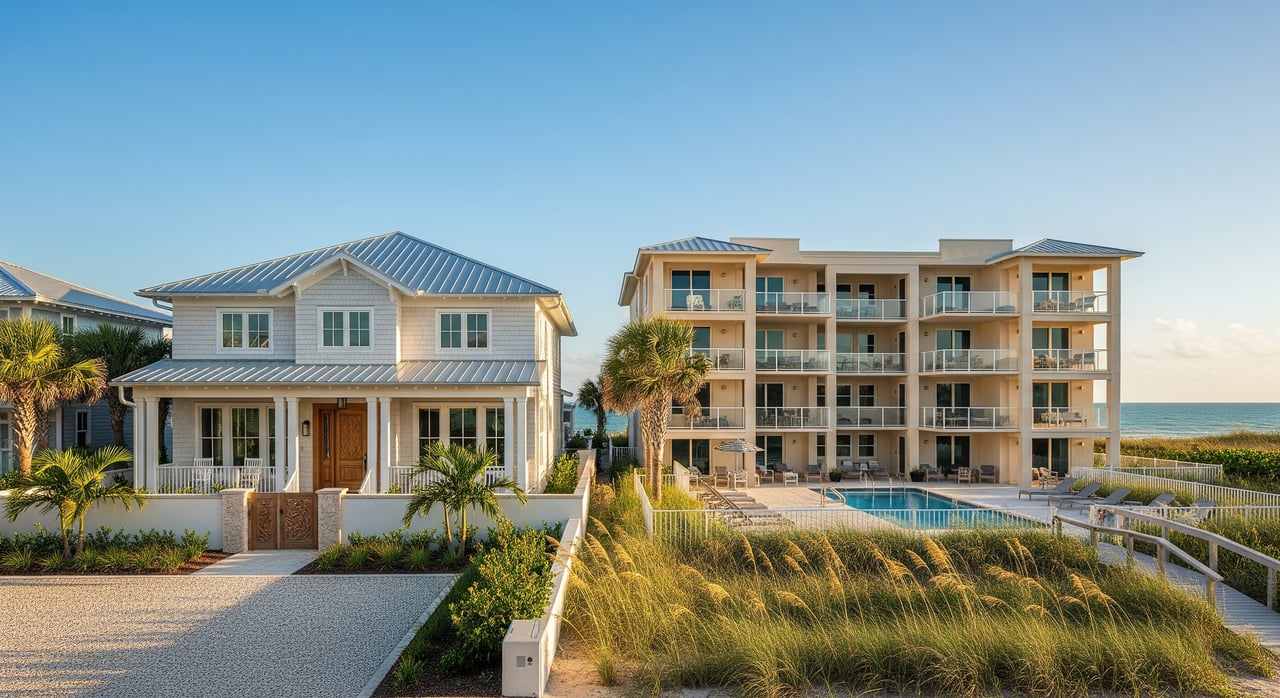
HOA vs COA: How Melbourne Beach Communities Differ
December 4, 2025
December 4, 2025
Are you trying to decide between a single-family home in an HOA or a condo in a condo association in Melbourne Beach? You are not alone. The rules, fees, insurance, and resale process work differently in Florida, and the coastal setting adds a few more layers. In this guide, you will learn how HOAs and condo associations compare, what to watch for on the Space Coast, and the documents to review before you buy or sell. Let’s dive in.
An HOA, or homeowners association, usually governs a neighborhood of fee-simple homes. You own the land and the structure, and the HOA manages common areas like pools, parks, or private roads.
A condo association, often called a COA or condominium association, governs a condominium property. You own the interior of your unit and share ownership of common elements like the building structure, roof, hallways, pool, and grounds.
Florida law treats these differently. Condominium associations follow Chapter 718 of the Florida Statutes. Homeowners associations follow Chapter 720. Both can levy assessments, place liens for nonpayment, and use statutory processes to collect.
In a condo association, the association typically maintains the building exterior and major systems. That can include the roof, exterior walls, elevators, and common plumbing or wiring.
In an HOA, you usually maintain your own home’s exterior, roof, and driveway unless the governing documents say otherwise. The association maintains shared amenities and any common-area landscaping.
If you enjoy low-maintenance living, a condo’s shared responsibilities may appeal to you. If you want more control over exterior choices, a single-family home in an HOA may be a better fit.
Condo associations carry a master policy that insures the building structure and common elements. As a condo owner, you typically buy an HO-6 policy for interior finishes, personal property, and liability.
In an HOA, the association insures only the common areas. You carry a standard homeowners policy, often an HO-3, that covers your dwelling and contents. The exact split always depends on the community’s documents.
In Melbourne Beach, wind and flood are big considerations. Rising premiums and limited wind coverage can increase monthly fees for condos and out-of-pocket costs for single-family homes. Lenders and insurers often review association financials and reserves in detail.
Both HOAs and condo associations collect regular assessments to run the community. They also set aside reserves for large capital projects.
Condo associations often maintain reserves for items like roofs, painting, and elevators. HOAs can also keep reserves, but requirements and practices vary by the documents and statute.
Special assessments can happen in either setup. These may cover storm deductibles, major repairs, or insurance premium spikes. In Florida, recent attention around condos has focused on reserves, building safety, and transparency.
In a condo, changes that affect structure or common elements usually require board approval. Inside your unit, structural changes typically need permission too.
In an HOA, exterior changes like paint, fencing, or additions often go through an architectural review. Rules are enforced through covenants and fines set in the documents.
Rental rules differ by community. Many associations limit short-term rentals, set minimum lease terms, or cap the number of rented units. Condo associations are often stricter. Always verify the recorded rules and any Melbourne Beach or Brevard County restrictions that may apply.
Florida requires associations to provide resale or estoppel certificates that disclose key information. The details, deadlines, and fee caps are set by the applicable statute, which is Chapter 718 for condos and Chapter 720 for HOAs.
These certificates should confirm unpaid assessments, special assessments, budgets, reserves, and any litigation or insurance claims that could affect the property. Review these carefully to avoid surprises.
Flood risk and storm exposure are part of life on the barrier island. Flood zones can affect mortgage requirements and insurance pricing, so confirm maps and elevation when you evaluate a home or condo.
Shoreline and seawall work can require permits from Brevard County and state agencies. If your community is on or near the beach, find out whether the association is responsible for dunes, seawalls, or beach access points.
Condo lending can be sensitive to association health. Owner occupancy rates, delinquencies, reserves, litigation, and insurance all factor into loan approval and resale value.
Use this checklist for any Melbourne Beach condo association or HOA:
Choose a condo association if you want shared maintenance and amenities with less hands-on exterior work. Review reserves, insurance stability, and recent inspection findings.
Choose an HOA home if you want more control over your property and are comfortable managing roof and exterior upkeep. Budget for individual wind and flood coverage as needed.
Either way, your decision should align with your daily needs, risk tolerance, and long-term budget. A clear look at documents and insurance will help you buy with confidence.
A local, barrier-island expert can help you compare communities, read the documents, and spot red flags before you commit. You get a smoother process and better clarity on costs and timelines.
If you are weighing options in Melbourne Beach or nearby Space Coast towns, I am here to help. I provide bilingual guidance, virtual tours for remote buyers, and a polished listing process for sellers. When you are ready, connect with Milly Akins for a friendly, detailed plan tailored to your goals.
Stay up to date on the latest real estate trends.



Milly is active in her community, loves spending time with her family and Belgian Malinois, and believes in helping others. She works with both buyers and sellers and is ready to show you what a seamless real estate experience feels like.