Preparing To List A Canalfront Home In Indian Harbour
July 9, 2026
July 9, 2026
If you’re getting ready to sell a canalfront home in Indian Harbour Beach, you’re not just listing bedrooms and bathrooms. You’re presenting a waterfront lifestyle, and buyers will notice every detail from the first photo to the condition of the dock. In a market where preparation can help your home stand out, a smart plan can make your listing feel more polished, more credible, and easier for buyers to say yes to. Let’s dive in.
Indian Harbour Beach sits on a barrier island between the Atlantic Ocean and the Indian River Lagoon, so canalfront homes often appeal to buyers who care as much about water access and outdoor living as they do about interior space. That means your prep work should go beyond paint colors and countertops.
For many buyers, the real value is how the property lives day to day. A clean backyard, a tidy dock area, and clear views of the canal can help buyers picture mornings on the patio, launching a kayak, or enjoying the water from home.
City materials also show ongoing stormwater work along the Big Muddy Canal, including a City Hall baffle-box project to reduce pollutant loading to the Indian River Lagoon and a multi-phase seawall replacement program. That makes the condition and presentation of your canal edge part of the listing story, not an afterthought.
Recent public market tracking from Redfin described Indian Harbour Beach as somewhat competitive, with a median sale price of $497,000 and a median 67 days on market over the three months ending May 2026. That does not mean every canalfront home will sell the same way, but it does support a practical takeaway: strong presentation matters.
When buyers have options, homes that feel organized, well-maintained, and easy to understand often create less pricing friction. Good preparation can also help reduce the time your home spends on the market.
Before you schedule cleaning crews or photography, gather the documents that support your home’s waterfront features. For canalfront properties, this step can be just as important as cosmetic prep because buyers often ask detailed questions about docks, lifts, seawalls, and permits.
Brevard County says residential marine permits are required for the installation or replacement of docks, seawalls, or boat lifts in manmade bodies of water, including canals. The county’s application process calls for staff review and asks for a current survey prepared within the last 180 days, along with a plot plan showing existing and proposed marine improvements, waterway width, and dimensional ties.
The City of Indian Harbour Beach Building Department also provides access to permit-search tools and FEMA flood map information. Before your listing goes live, it helps to verify permit history and confirm what records you have available.
A complete packet helps your home feel documented and cared for rather than uncertain or improvised. It can also make it easier to answer buyer questions quickly.
Once your paperwork is in order, turn to repairs. If something is obviously worn, broken, or poorly maintained, it is usually better to address it before buyers see it in person or in photos.
For marine or over-water work, Brevard County requires contractors to show U.S. Longshore and Harbor Workers insurance coverage, and owner-builders must apply in person. For sellers, the practical takeaway is simple: use properly licensed help for pre-list repairs and keep the paper trail organized.
This does not mean you need to take on a major renovation. It means you should focus on repairs that improve confidence, safety, appearance, and documentation.
Once the home is repaired and documented, cleaning and decluttering should become the main priority. According to NAR’s 2025 staging survey, the most common seller recommendations were decluttering, cleaning the entire home, and improving curb appeal.
The same survey found that 29% of agents saw staged homes receive a 1% to 10% increase in the dollar value offered, and 49% said staging reduced time on market. More than half of seller’s agents did not fully stage the home, but still recommended decluttering or correcting faults. That’s good news if you want to improve presentation without overspending.
NAR also reported a median staging service cost of $1,500. For many sellers, that supports a selective budget approach: clean first, declutter thoroughly, touch up paint, and fix obvious visual distractions before spending more on larger cosmetic changes.
The rooms most commonly staged were the living room, primary bedroom, dining room, and kitchen. For a canalfront home, these spaces should feel bright, open, and calm.
Buyers respond to homes that help them picture their future routine, so your goal is not to decorate heavily. Your goal is to create clear sightlines, a neutral feel, clean windows, and simple furnishings that let the water views do the work.
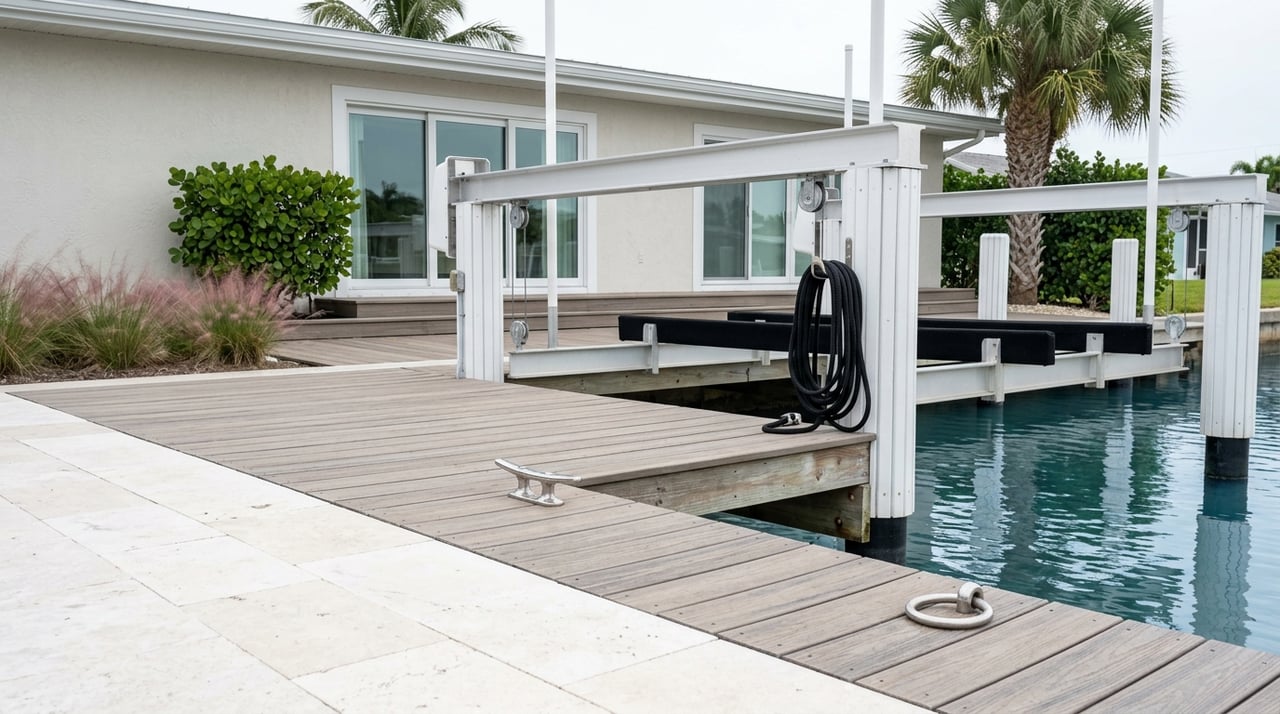
For waterfront property, outdoor presentation matters just as much as indoor presentation. The dock, boat-lift zone, backyard, and patio should look tidy, intentional, and easy to maintain.
This is not a structural opinion. It is a presentation strategy based on how buyers respond to clean, uncluttered spaces and how waterfront homes are visually marketed.
A canalfront home in Indian Harbour Beach should feel connected to the water from the moment buyers start scrolling. That means removing anything that blocks views, crowds walkways, or distracts from the backyard-to-canal transition.
Start by clearing window sills, trimming back anything that interrupts the sightline, and simplifying outdoor furniture. If you have too many decorative pieces, boat accessories, or mismatched patio items, store them before photos and showings.
A clean visual path from inside the home to the water can make the property feel larger and more inviting. It also helps buyers understand what they are really buying.
Online presentation has a major impact on how buyers shop. NAR’s 2024 buyer and seller trends report found that buyers rated photos as very useful at 66%, virtual tours at 33%, and videos at 21% when searching online.
In the same report, buyers’ agents said photos were highly important in listings at 73%, followed by videos at 48% and virtual tours at 43%. NAR also found that 41% of buyers first looked online for properties and 72% used a mobile or tablet search device.
That supports a launch plan built for fast online browsing. Your home should be ready for professional still photography, a walkthrough video, and a virtual tour that clearly shows the relationship between the home, backyard, dock area, and canal.
When it is time to write the listing description, precision matters. Say exactly what the property has and avoid claims that sound attractive but cannot be supported.
For example, terms like canalfront, dock, boat lift, Banana River Lagoon access, or kayak-friendly water access should only be used if they are true for your property. Avoid vague claims about water depth, navigability, or the size of boat the property can handle unless you have documentation to support those details.
There is also useful local context here. The city notes that Oars & Paddles Park provides access to the Banana River through the Whiting Waterway, and privately owned motorized boats are allowed in the canal but may not be moored or docked at the public dock. That kind of local detail supports careful, specific wording rather than broad assumptions.
If the process feels overwhelming, keep it simple. The most practical order is to verify paperwork first, complete needed repairs second, stage and clean third, then photograph and launch last.
That sequence helps your listing stay aligned with what can actually be documented and shown. It also reduces the chance that you market a feature before confirming the records behind it.
Canalfront buyers in Indian Harbour Beach are often looking for more than a house. They are looking for a property that feels easy to enjoy, easy to understand, and well cared for from the shoreline to the front door.
When your documents are ready, the home is clean, and the waterfront features are presented clearly, buyers can focus on the lifestyle your property offers. That is often what helps a listing feel more compelling from day one.
If you’re thinking about selling a canalfront home in Indian Harbour Beach and want a polished, organized plan for preparing it, Milly Akins can help you build a listing strategy that highlights your home’s waterfront story with care and clarity.
Stay up to date on the latest real estate trends.


Milly is active in her community, loves spending time with her family and Belgian Malinois, and believes in helping others. She works with both buyers and sellers and is ready to show you what a seamless real estate experience feels like.