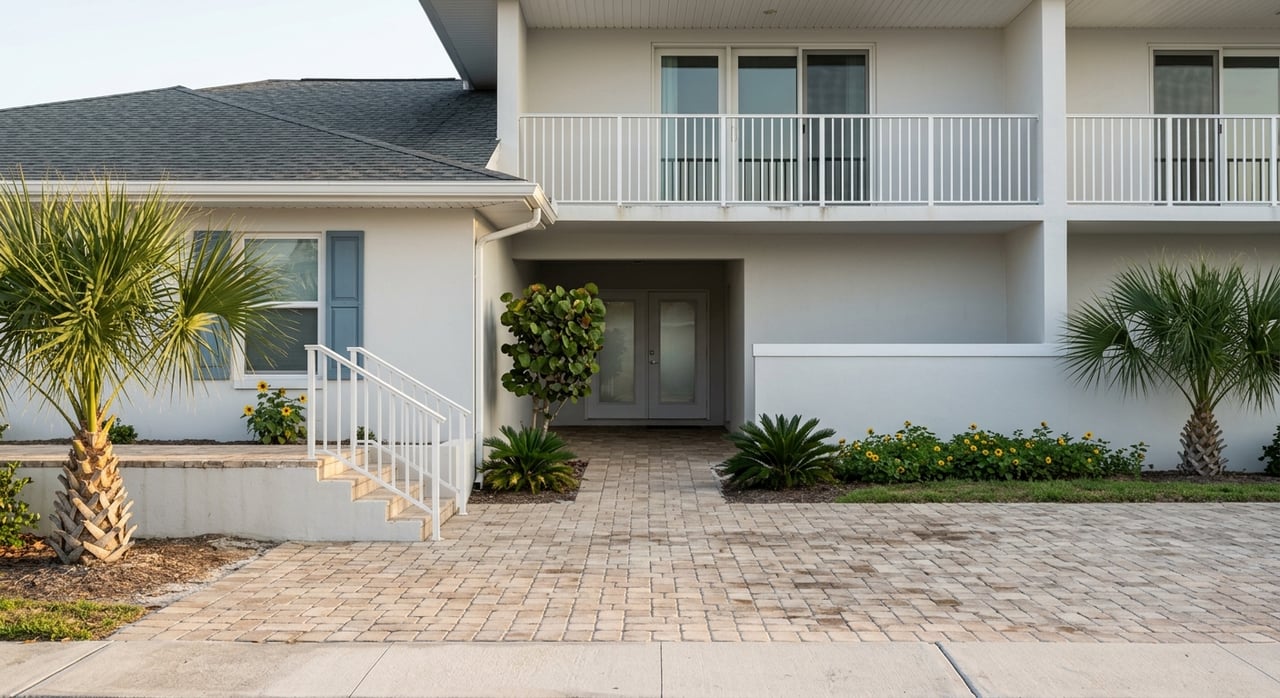
What Cocoa Beach Market Trends Mean For Second Homes
June 4, 2026
June 4, 2026
Thinking about a second home in Cocoa Beach? This market can look simple on the surface, but the details matter more here than in many inland areas. Between coastal location, condo rules, rental seasonality, and insurance planning, the right purchase often comes down to understanding how local trends affect your actual use of the property. Let’s dive in.
Cocoa Beach is a barrier-island market on Florida’s Space Coast, so second-home demand is shaped by beach access, vacation-use patterns, and coastal risk factors like flood exposure. That makes it different from a typical suburban or inland market where location and pricing may be more straightforward.
As of March 2026, Realtor.com reported 310 homes for sale in Cocoa Beach, a median listing price of $475,000, a 95% sale-to-list ratio, and a median 73 days on market. That same source categorized Cocoa Beach as a balanced market. For many second-home buyers, that points to a market where you may have room to compare options rather than rush into every listing.
Redfin’s March 2026 sold-data view showed a lower median sale price of $415,900, 67 days on market, and 32 homes sold, with a Compete Score of 29, or “not very competitive.” The difference between list-price and closed-sale data is a useful reminder that asking prices and actual sales can tell different stories, especially when condos and single-family homes are mixed together.
A balanced market does not mean every property type behaves the same way. In Cocoa Beach, your experience can vary a lot depending on whether you are shopping for a condo, a single-family home, or a property you may use part-time and rent seasonally.
That is especially important if you are buying from out of town or trying to balance lifestyle goals with future flexibility. A property that looks attractive online may come with different resale pace, carrying costs, or building-level obligations once you dig deeper.
Inventory has been mixed. Realtor.com showed Cocoa Beach homes for sale were down 18.88% year over year, even though inventory rose 1.33% month over month. In practical terms, that means choices may still feel limited compared with last year, but new opportunities are entering the market.
For second-home buyers, timing matters because your search is often tied to personal-use plans, travel schedules, and seasonal demand. If you want the widest set of choices, watching fresh listings closely can help. If you are more focused on negotiation room, your timing strategy may look different.
Florida Realtors also reported that March 2026 marked the start of the spring selling season statewide, with higher closed and pending sales. That fits the usual spring ramp-up in Florida and suggests that buyers may see more activity as the season picks up.
If you plan to use your second home part-time and rent it while you are away, seasonality is a major part of the decision. AirROI’s 2026 Cocoa Beach short-term-rental data showed average annual revenue of $46,462, an average nightly rate of $322, 44.8% occupancy, and an average booking lead time of 69 days.
The strongest rental month was March. February bookings were made furthest in advance, with a 98-day lead time, while September was the softest month and had the shortest lead time at 53 days. That tells you demand is not evenly spread across the year.
For buyers, this creates two useful planning points. First, winter and spring dates may need to be blocked or managed well in advance if rental use matters to you. Second, late summer and early fall may offer a different pace in the market, which can be helpful if your goal is to focus on ownership terms rather than peak rental timing.
For second-home buyers in Cocoa Beach, property type may be the biggest decision of all. Brevard County’s March 2026 MLS report showed single-family homes and condos were moving under very different conditions.
Single-family homes had 935 closed sales, up 7.2% year over year. New listings fell 12.7%, inventory sat at 3.7 months’ supply, and the median sales price was $369,999. That points to a tighter segment with less supply.
Townhouse and condo sales rose 11.5% to 213 closings, but the median sales price fell 11.0% to $275,000 and inventory reached 7.4 months’ supply. Cash purchases also increased 7.4% in the condo and townhome segment. For many buyers, that means condos may offer more negotiating room and a lower entry point, but often with more due diligence at the building level.
Statewide trends support that same pattern. Florida condo-townhouse supply was 9.1 months in March 2026, compared with 4.8 months for single-family homes. Florida Realtors also reported condo time to contract at 60 days in April, showing condos were generally moving more slowly than single-family properties.
Cocoa Beach listing data reinforces the price gap. Redfin’s condo page showed 192 condos for sale at a median listing price of $399,000 and a median 81 days on market. That compares with Realtor.com’s citywide median listing price of $475,000 and 73 days on market.
For you, that may mean a condo offers a more accessible entry into Cocoa Beach. It may also mean a longer resale timeline or more property-specific review before you feel comfortable moving forward. Price alone should not be the only factor.
Some buyers assume vacation rentals are heavily restricted everywhere along the coast, but Cocoa Beach has a specific local framework. The city’s ordinance does not prohibit vacation rentals or limit duration and frequency in the way some buyers expect. Instead, it requires registration and safety and operational compliance.
The code applies to condos, single-family homes, and certain small multi-family dwellings used as transient lodging. It also requires at least one telephone capable of calling 911. If rental flexibility is part of your second-home plan, this is the kind of local detail worth reviewing before you make an offer.
If you are considering a condo, building-level review matters just as much as the unit itself. Florida law requires milestone inspections for condo and co-op buildings that are three or more habitable stories tall by age 30, and every 10 years after that.
The Structural Integrity Reserve Study must identify certain visual elements, estimated remaining useful life, replacement cost or deferred maintenance, and a reserve funding schedule. By contrast, single-family, two-family, three-family, and four-family dwellings with three or fewer habitable stories are exempt from the milestone-inspection requirement.
That does not make condos a bad fit. It simply means you should understand reserves, maintenance planning, and building obligations before deciding what feels like the best second-home option for you.
In Cocoa Beach, weather is part of market timing too. NOAA says Atlantic hurricane season runs from June 1 through November 30, and Brevard County’s floodplain office notes that local flooding can result from tidal surges, tropical storms, hurricanes, and the Atlantic Ocean.
Brevard County also states that most standard homeowners insurance policies do not cover flood damage. Flood insurance is typically separate, and NFIP flood policies generally have a waiting period before coverage begins. For second-home buyers, that means insurance planning should happen early, not after you are under pressure to close.
It is also important to model ownership costs correctly. Brevard County’s Property Appraiser states that homestead exemption is for a permanent primary residence. A second home should not be projected with homestead tax treatment.
That is a simple detail, but it can affect your monthly and annual cost picture. If you are comparing Cocoa Beach with another location, make sure you are using the right tax assumptions from the start.
Before you move forward on a second home in Cocoa Beach, it helps to ask a few direct questions:
These questions can help you compare options clearly instead of getting pulled in by photos or headline pricing alone.
Right now, Cocoa Beach looks less like a frenzy and more like a selective coastal market where details matter. Condos may give you a lower entry point and more inventory, while single-family homes may offer tighter supply and a different negotiation dynamic. Seasonality, rental timing, flood planning, and building-level due diligence all play a larger role here than they might in another market.
If you want a second home that supports both your lifestyle and your long-term comfort level, the best move is to match the property type to how you plan to use it. That is where local guidance can make a real difference.
If you are weighing condos versus single-family homes in Cocoa Beach, or buying from out of town and want organized local insight, Milly Akins can help you sort through the details with a warm, high-touch approach tailored to the Space Coast.
Stay up to date on the latest real estate trends.
Milly is active in her community, loves spending time with her family and Belgian Malinois, and believes in helping others. She works with both buyers and sellers and is ready to show you what a seamless real estate experience feels like.